


Liquid Cooling • Computing Power • Win the Future 2026
2026-03-03

A single Lantern Festival lantern encapsulates the hope for reunion and a prosperous year ahead; a grand event carries the power of industry innovation and progress.
With the explosive growth of AI large-scale models, high-performance computing, and data center computing power, traditional air-cooling solutions are facing unprecedented challenges. Against this backdrop, liquid cooling technology has emerged as a rising star, becoming a “new favorite” in the heat dissipation field. Today, we’ll discuss a seemingly insignificant yet crucial component in liquid cooling systems—the liquid cooling pipe.
一、Understanding Liquid Cooling Hose
Cooling hose is the core channel for the circulation of the working fluid in a liquid cooling system, undertaking three key functions: first, to accurately allocate flow rate and flow resistance to ensure balanced cooling of each heat dissipation unit; second, to build a bridge connecting equipment to achieve efficient docking of components such as cold plates, cabinets, and CDU (cooling distribution units); and third, to adapt to different operating conditions, resist external influences such as vibration, high and low temperatures, and corrosion, and eliminate the risk of leakage.
二、Classification of Liquid Cooling Piping by Material
1.EPDM rubber hose
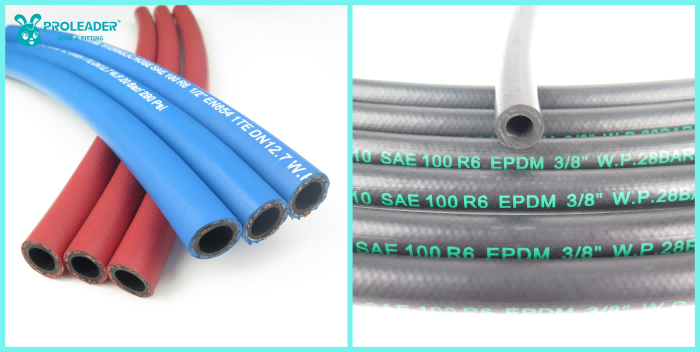
Compatible with common coolants such as water-based glycol and propylene glycol, it is cost-effective and highly flexible, making it suitable for internal connections in server cold plate liquid cooling systems. It is important to choose a peroxide sulfidation formulation to prevent sulfate leaching and coolant contamination.
2.Lined liquid-cooled rubber hose
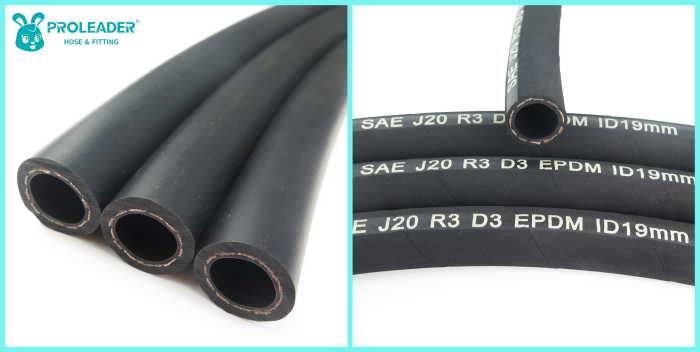
The liner is composed of two high-performance materials: PA11 nylon and UHMWPE ultra-high molecular weight polyethylene. The outstanding advantages of the PA11 nylon liner are its higher operating temperature resistance and better airtightness; while the UHMWPE ultra-high molecular weight polyethylene liner exhibits excellent resistance to acid and alkali corrosion, but its continuous operating temperature is relatively low.It is also compatible with conventional coolants such as water glycol and propylene glycol.
3.PTFE hose
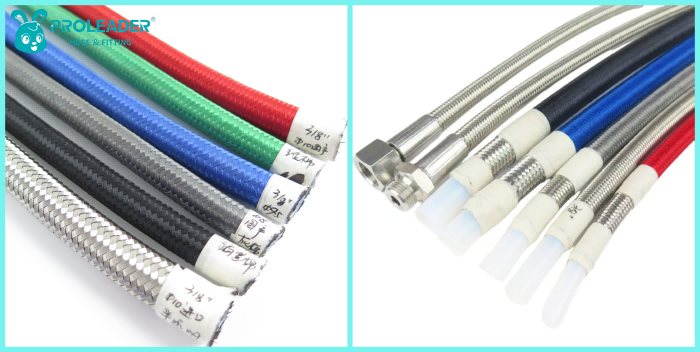
Known as the “King of Plastics,” it withstands temperatures from -200℃ to 260℃, exhibits extremely high corrosion resistance (compatible with all media except molten sodium and liquid fluorine), produces no leachables, and is suitable for transporting fluorinated liquids in immersion liquid cooling systems for data centers. Its smooth inner wall minimizes flow resistance.
4.Stainless steel metal hose
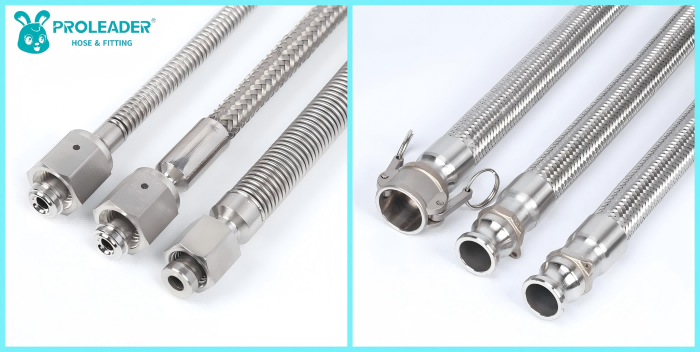
Its corrugated structure gives it excellent flexibility and compensation capabilities, effectively absorbing stress caused by thermal expansion and contraction or vibration, reducing the load on connection points, and thus greatly improving the long-term reliability of the system.
三、Advantages and disadvantages of cooling hose
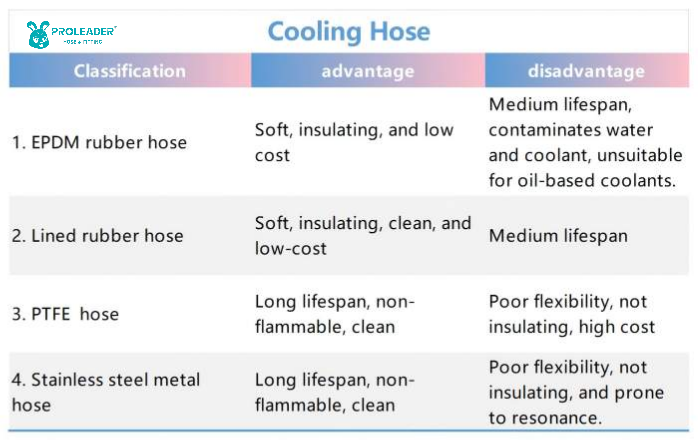
The battle for computing power begins with heat dissipation; the stability of heat dissipation depends on the hose. Liquid cooling experienced explosive growth in 2026, and liquid cooling pipes have evolved from supporting components to critical foundational components determining system reliability.
We focus on the R&D and manufacturing of liquid cooling pipes, providing safe and unobstructed “blood vessels” for AI computing power, new energy, and industrial thermal management through stable quality, rapid delivery, and professional solutions.


amy@chnhose.com

+86 18331807383 / +86 15603181870


Power by: cnwangju.com
Sitemap


 +86 15603181870
 +86 18331807383
 amy@chnhose.com
